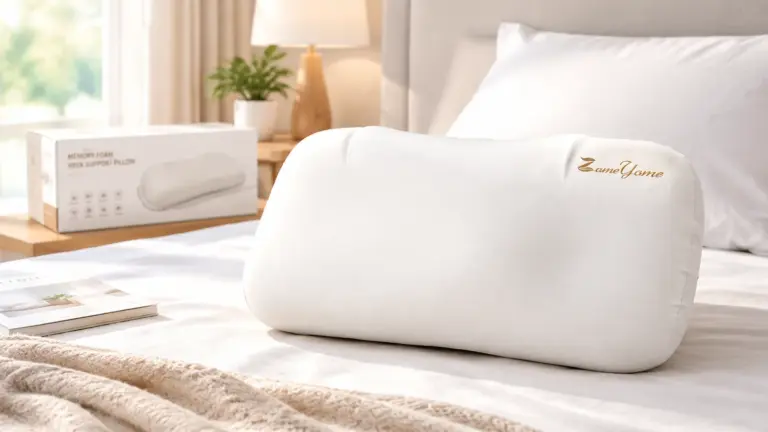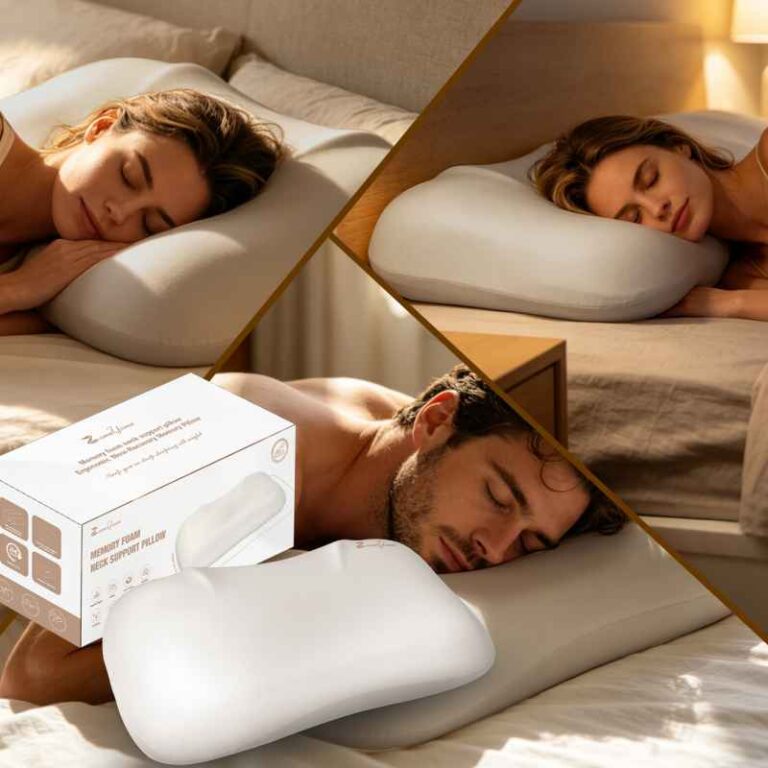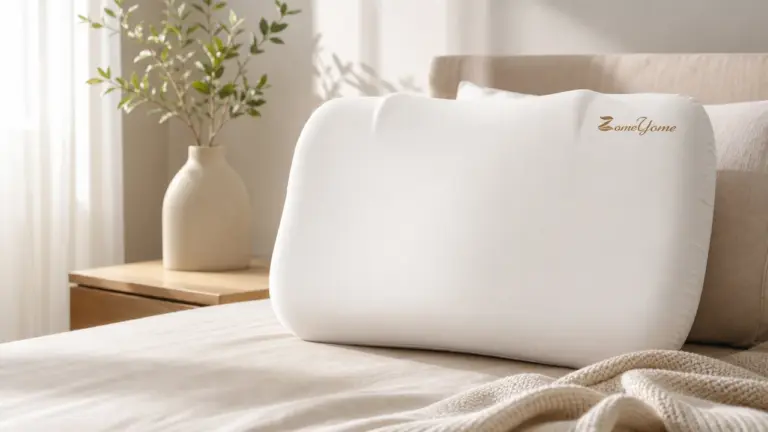

A zero pressure neck support pillow is designed to distribute weight more evenly, reduce local pressure points, and keep the head, neck, and shoulders in a more natural position during sleep. For many shoppers, the goal is simple: less stiffness in the morning and better overall comfort at night.
If you are comparing options in the U.S. market, focus on fit first, not marketing language. The right pillow depends on your sleep position, firmness preference, and how much contour support your neck needs. A practical place to start is our cervical neck pillow guide.
Table of Contents
What zero pressure really means in a neck pillow
In plain terms, zero pressure means the pillow is shaped and filled to reduce concentrated stress on one area. Instead of letting the head sink unevenly or sit too high, the pillow spreads load across a wider surface. That can help the neck feel more supported, especially for sleepers who wake up tense.
This does not mean the pillow removes all pressure. It means the design aims to limit hot spots and support better sleep alignment. The best test is how your neck feels after a full night, not how the pillow sounds in a product description. Best practice: look for even support, not extreme softness or overly rigid contouring.
How a zero pressure neck support pillow works
Most ergonomic neck pillows use a combination of contour shape, loft, and responsive fill. The contour helps cradle the cervical spine, while the loft keeps your head from dropping too low or pushing forward. When these three factors work together, the pillow can support a more neutral position through the night.
For some sleepers, this also reduces tossing and turning. A stable surface gives your shoulders and neck less reason to keep adjusting. The key is balance: too much firmness can feel restrictive, while too little support can flatten out quickly. Best practice: match contour and loft to your sleep position before judging comfort.
Key features to compare before you buy
Not all neck support pillows solve the same problem. Use the table below to compare the features that matter most.
| Feature | What to look for | Why it matters |
|---|---|---|
| Material | Memory foam, latex, kapok, or blended fill | Changes support, contouring, and temperature feel |
| Firmness | Medium to medium-firm for most adults | Affects neck lift and pressure distribution |
| Loft | Low, medium, or adjustable height | Helps keep the spine aligned in your sleep position |
| Shape | Contour, butterfly, or classic rectangular design | Determines how the pillow supports the head and shoulders |
| Cooling | Breathable cover, airflow channels, open-cell foam | Improves comfort for hot sleepers |
| Adjustability | Removable fill or dual-height design | Makes fit testing easier |
If you want a broader framework for evaluating materials, see our ergonomic contour pillow guide. Best practice: compare materials and loft together, because one without the other rarely gives a good fit.
Best pillow type by sleep position
Back sleepers
Back sleepers usually need moderate loft and steady neck support. A contoured or gently curved pillow can help keep the head from tipping back too far. If the pillow is too high, it may strain the neck. Best practice: choose a medium loft and test whether your chin stays level, not lifted.
Side sleepers
Side sleepers often need more loft to fill the gap between the shoulder and the head. A firmer contour pillow or an adjustable design may work better here because it helps maintain alignment through the cervical spine. Best practice: make sure your nose stays centered over your sternum instead of dropping toward the mattress.
Stomach sleepers
Stomach sleeping usually requires the lowest loft of all. A thick neck pillow may feel too aggressive in this position and can push the head upward. If you sleep on your stomach, look for a low-profile option or consider changing position gradually. Best practice: keep support minimal and prioritize a neutral neck angle.
Combo sleepers
Combination sleepers benefit most from adaptability. A pillow with moderate resilience, a breathable cover, and balanced contouring can handle more than one position without feeling unstable. Best practice: choose an adjustable or medium-height design if you change positions often.
Memory foam vs latex vs other fills
Material choice affects pressure relief, durability, and temperature feel. Here is a simple comparison.
| Material | Support feel | Cooling | Best for | Trade-off |
|---|---|---|---|---|
| Memory foam | Conforming and supportive | Moderate to good, depending on design | Contouring and pressure relief | Can trap heat if ventilation is limited |
| Latex | Buoyant and responsive | Often better airflow | Firmer support and easier repositioning | May feel too lively for sleepers who want deep contouring |
| Kapok | Soft with some loft adjustment | Usually breathable | Natural feel and lighter support | May compress more over time |
| Fiber blends | Medium softness | Depends on cover and fill density | Budget-friendly comfort | Less precise neck support |
For a zero pressure neck support pillow, memory foam is often chosen for contouring, while latex is often preferred for bounce and airflow. If you run hot, cooling features matter more than the fill label alone. Best practice: judge the whole build, including cover, core, and ventilation.
How to choose the right firmness and loft
Firmness and loft are the two settings that most affect fit. A pillow that is too soft can collapse under the head. A pillow that is too firm can create a fixed point of pressure. The goal is support that feels present but not forceful.
Use this quick fit test at home:
- Lie in your normal sleep position.
- Check whether your neck feels supported without being pushed forward.
- See if your head stays level with your spine.
- Turn once or twice and note whether the pillow keeps its shape.
- Wake up the next morning and check for stiffness, not just comfort at bedtime.
If the pillow feels too high, your jaw may tilt downward or your neck may feel compressed. If it feels too low, your head may sink and your shoulders may tense. Best practice: test for at least a few nights before deciding the pillow is wrong for you.
When a neck support pillow may help and when it may not
A well-matched cervical pillow can support better alignment and reduce pressure around the neck and shoulders. It may be helpful for sleepers who wake up with stiffness, especially if the issue is related to poor pillow height or a worn-out fill. ZomeYome’s own product approach also reflects this practical use case, with a design made for side, back, and stomach sleepers and a slow rebound material that aims for balanced softness and firmness.
That said, a pillow is not a fix for every cause of discomfort. If neck pain comes from injury, persistent inflammation, or another medical issue, sleep setup is only one part of the picture. Best practice: treat the pillow as a support tool, not a medical solution.
When to replace an old pillow
Even a good pillow loses performance over time. If your pillow stays flat, clumps, smells persistent, or no longer supports your neck in the same way, it may be time to replace it. A pillow that once felt right can slowly drift out of alignment without you noticing.
- It no longer rebounds after compression.
- You wake with more stiffness than before.
- You need to fold or stack it to get comfort.
- The cover or fill has visible wear.
- It feels hot and dense even after fluffing.
As a general rule, replace the pillow when support changes are obvious, not when it simply looks old. Best practice: compare your current pillow against your body comfort, not just its appearance.
Authoritative reference: Neck support pillows: a comparative study – PubMed.
FAQ
What does zero pressure mean in a neck pillow?
It means the pillow is designed to spread pressure more evenly and reduce hot spots under the head and neck. In practical use, that usually feels like steadier support and less localized strain. Best practice: look for even weight distribution rather than a single soft spot.
Can a neck support pillow help with neck pain?
It may help if the discomfort is related to poor sleep alignment, improper loft, or worn support. It is not a treatment for medical conditions. Best practice: pair a better pillow with good sleep posture and, if needed, professional advice.
Which pillow shape works best for my sleep position?
Back sleepers often do well with contour support, side sleepers usually need more loft, and stomach sleepers generally need a low-profile design. Best practice: start with your main sleep position, then adjust for secondary positions.
Is memory foam or latex better for pressure relief?
Memory foam usually offers more contouring, while latex tends to feel more responsive and airy. The better choice depends on whether you want deeper cradle support or a more buoyant feel. Best practice: choose the material that matches both your support and temperature needs.
How do I know if my pillow is too high or too low?
If your neck feels compressed or your chin tilts down, it is likely too high. If your head sinks and your shoulders tense, it is likely too low. Best practice: use the mirror test and the next-morning stiffness check together.
Can one pillow work for multiple sleep positions?
Yes, but it usually needs a balanced loft and moderate firmness. Adjustable or well-shaped contour pillows are often better for combo sleepers. Best practice: choose versatility only if it still supports your primary position well.
If you are ready to compare options, explore more from ZomeYome and choose the pillow shape that fits your sleep routine, not just a product label. You can also shop and review the details that matter most before you buy.
Discuss Your Zero Pressure Neck Support Pillow Requirements
Need help selecting the right zero pressure neck support pillow solution for your project?