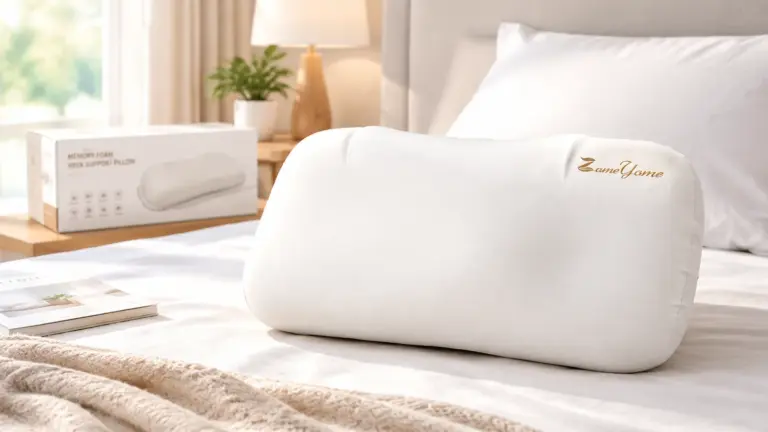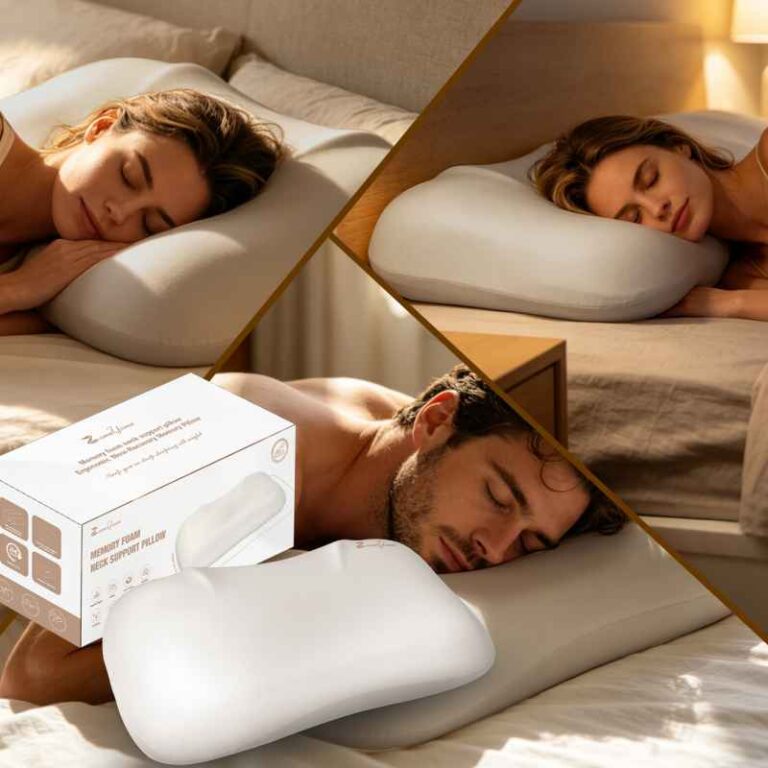

A cervical support pillow is designed to help keep your head, neck, and shoulders in a more neutral position during sleep. For many people, that means better alignment, less strain on the cervical curve, and a more comfortable night overall. The right choice depends on how you sleep, how much support you need, and how the pillow feels under your neck.
If you are comparing options for neck pain relief, sleep posture, or better head and neck support, the key is fit rather than hype. A well-matched pillow should support the natural curve of the neck without pushing the head too high or letting it sink too low.
Table of Contents
What a Cervical Support Pillow Does
A cervical support pillow is shaped to support the area between the head and shoulders, with the goal of encouraging neutral spinal alignment. Unlike a standard bed pillow, it often uses a contoured shape, firmer zones, or a deeper center cradle to reduce awkward neck angles.
That does not mean it is a cure for pain. It is a sleep accessory that may help reduce pressure, improve sleep posture, and make it easier to rest without constant repositioning. Best practice: choose a pillow that matches your sleeping position first, then compare materials and loft.
How It Supports Neck Alignment
Good cervical alignment means your head is not tilted too far forward, backward, or to one side while you sleep. When a pillow is too flat, too high, or too soft, the neck can stay tense through the night. Over time, that can leave you waking up stiff.
Cervical pillows help by filling the gap between the neck and the mattress, especially for side sleeping and back sleeping. Some designs also support the shoulders or create a deeper head cradle to reduce movement. Best practice: look for a shape that keeps your nose, sternum, and pelvis in a more natural line.
Who Benefits Most
These pillows are often a good fit for people who wake up with neck stiffness, shoulder tension, or frequent pillow readjustment. They can also help sleepers who want more structured neck support than a regular pillow provides.
- Back sleepers who need consistent neck support.
- Side sleepers who need enough loft to bridge the shoulder-to-head gap.
- People who prefer a firmer, more defined sleep surface.
- Sleepers who want a contoured pillow for cervical alignment.
They may be less suitable for people who dislike shaped pillows, move constantly through the night, or prefer a very soft, low-profile feel. Best practice: match the pillow to your dominant sleep position, not to a generic comfort claim.
How to Choose the Right One
1. Start with Sleep Position
Side sleepers usually need more loft so the head does not sink toward the mattress. Back sleepers often do better with moderate loft and a contour that supports the natural curve of the neck. Stomach sleeping is the hardest position to match with cervical support because it often forces the neck into rotation.
Best practice: if you switch positions often, choose an adaptive design rather than an extremely rigid contour.
2. Check Loft and Firmness
Loft is the height of the pillow, and firmness is how much it resists compression. Too much loft can tip the head upward. Too little can leave the neck unsupported. A firmer pillow usually holds shape better, while a softer one can feel more forgiving but may collapse under load.
Best practice: prioritize loft that matches your shoulder width and mattress feel before judging softness alone.
3. Compare Materials
Memory foam is common because it provides structured contouring and stable support. Fiber fill usually feels softer and lighter, but it may flatten faster. Water and adjustable designs can offer more customization, though they may feel less familiar at first.
Best practice: pick the material that fits your tolerance for firmness, heat, and shape retention.
4. Look at Shape Details
Contoured pillows, butterfly-style designs, and deep center cradles all serve slightly different needs. Some shapes support the neck more directly. Others create room for the shoulders or arms, which can matter for side sleepers.
Best practice: compare the neck channel, edge height, and shoulder cutout as carefully as you compare the cover fabric.
Quick Comparison of Common Pillow Types
| Pillow Type | Best For | Main Benefit | Tradeoff |
|---|---|---|---|
| Contoured memory foam pillow | Back and side sleepers | Structured neck support and shape retention | Can feel firm or warm for some users |
| Butterfly contour pillow | Side sleepers and mixed sleepers | Supports head, neck, and shoulder area with a deeper cradle | May take time to get used to |
| Fiber fill cervical pillow | Softer feel preference | Lightweight and plush comfort | May compress more quickly |
| Adjustable cervical pillow | People who want tuning options | Customizable height and support | Requires more trial and adjustment |
Best practice: treat this table as a fit guide, not a ranking. The best pillow is the one that supports your body in real sleep conditions.
What to Expect During the Adjustment Period
It is normal for a new cervical pillow to feel different for several nights. Your neck muscles, shoulders, and sleep habits need time to adapt to a new support pattern. Some people adjust quickly. Others need a week or two before the pillow feels natural.
If the pillow causes persistent discomfort, your loft or firmness may be off. A pillow that is too aggressive can make you feel more strained, not less. Best practice: test a new pillow consistently for several nights before making a final judgment.
Common Buying Mistakes
- Choosing by price alone instead of fit.
- Ignoring shoulder width and sleep position.
- Picking a pillow that is too tall for back sleeping.
- Assuming softer always means better.
- Using the same pillow through visible flattening or loss of support.
Best practice: check how the pillow holds your neck in the first hour of sleep, not just how it feels in your hands.
When Neck Pain Needs Medical Attention
A cervical support pillow can be part of a better sleep setup, but persistent or severe neck pain should not be self-managed indefinitely. If pain continues, spreads, or affects daily movement, a clinician can help rule out issues that a pillow cannot fix.
Best practice: treat the pillow as a comfort and alignment tool, and seek medical advice when symptoms are ongoing, worsening, or unusual.
Recommended Next Step
If you are comparing support, fit, and sleep-position compatibility, start with a guide that explains pillow structure and use cases in more detail. Our cervical neck pillow guide covers the main shapes, materials, and selection basics in one place.
ZomeYome focuses on sleep products made to adapt to real bodies, not one fixed sleeping style. If you are ready to narrow your choice, review the available options and compare them against your loft, firmness, and sleep-position needs. Best practice: choose with your neck measurements and sleep habits in mind, then test the pillow under normal nightly use.
CTA
Ready to compare your options? Explore ZomeYome’s sleep-focused pillow collection and choose the support level that fits your neck, shoulders, and preferred sleep position.
Visit ZomeYome to review the current range and find a cervical support pillow that matches your needs.
Authoritative reference: The 10 Best Pillows For Neck Pain, Picked By Our Sleep Team.
FAQ
Can a cervical support pillow help with neck pain?
It may help reduce discomfort by supporting better alignment and reducing strain during sleep. Results vary by person, sleep posture, and pillow fit. Best practice: consider it a support tool, not a guaranteed fix.
Is a cervical support pillow good for side sleeping?
Yes, many side sleepers use cervical pillows because they can help fill the space between the shoulder and head. The key is choosing enough loft so the neck stays level. Best practice: compare shoulder width to pillow height before buying.
Is memory foam better than fiber fill?
Memory foam usually gives more structured support and better shape retention. Fiber fill often feels softer, but it may compress sooner. Best practice: choose memory foam if you want a more defined contour, and fiber fill if you prefer a plush feel.
How firm should a cervical support pillow be?
Firm enough to hold your neck in place, but not so firm that it creates pressure points. Back sleepers often prefer medium support, while side sleepers may need a firmer structure. Best practice: use firmness to support alignment, not to chase a hard feel.
How long should I test a new pillow before judging it?
Give it several nights, and often up to two weeks, unless it causes obvious discomfort right away. Your body may need time to adapt. Best practice: keep the trial consistent by using the same sleeping position and mattress setup.
Can the wrong pillow make neck pain worse?
Yes. A pillow that is too high, too low, or poorly matched to your sleep position can increase strain. Best practice: stop using a pillow that clearly worsens pain and reassess the fit.
Discuss Your Cervical Support Pillow Requirements
Need help selecting the right cervical support pillow solution for your project?