
Table of Contents
zomeyome contour pillow: Key Buying Factors
What Makes a Contour Pillow Different from Standard Pillows
Most standard pillows distribute weight evenly across the surface, which leaves gaps between your head, neck, and shoulders. This misalignment forces your cervical spine into unnatural positions throughout the night, leading to morning stiffness, tension, and chronic neck discomfort.
A contour pillow, by contrast, features strategically shaped curves that mirror your body’s natural anatomy. Instead of flattening under pressure, the contoured surface cradles your head and neck while maintaining proper spinal alignment. This targeted support reduces pressure points and allows your muscles to relax fully during sleep.
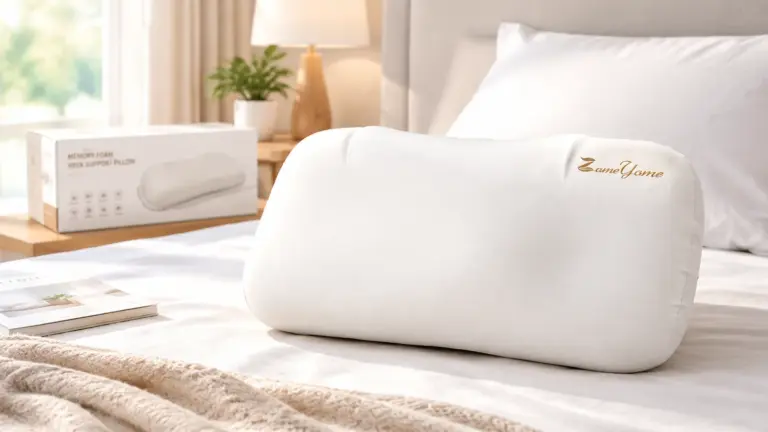
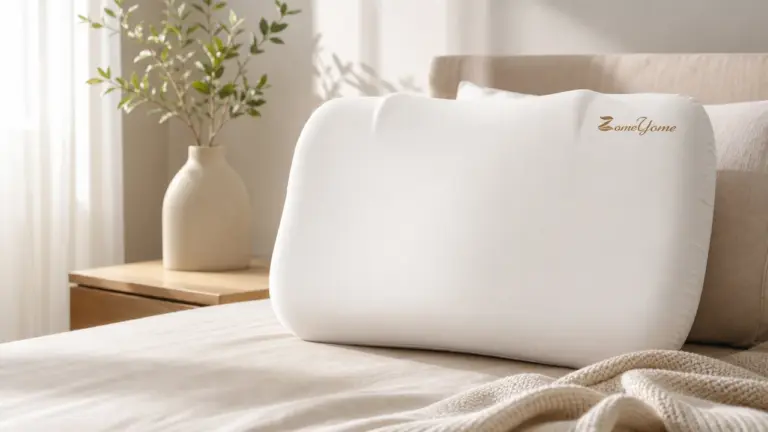
The ZomeYome contour pillow uses a bionic butterfly wing design tailored to the natural cervical curvature of the human body. The extended wing edges provide additional support for side sleepers, preventing arm numbness and offering comfort beyond the neck and shoulder region.
Best practice: If you wake up with neck stiffness or shoulder soreness, test your current pillow’s support by placing your hand under your neck while lying on your back—you should feel minimal resistance, indicating your neck is well-supported.
How Ergonomic Contour Design Reduces Neck and Shoulder Pain
Neck and shoulder pain often stems from poor cervical alignment during sleep. When your head sits too high or too low, the muscles and ligaments in your neck work overtime to stabilize your spine, causing tension that persists into the day.
Contour pillows address this by providing variable height and support across different zones. The ZomeYome pillow’s design allows your head to rest at an optimal height while the wing sections support your neck and upper shoulders. This multi-zone approach distributes pressure evenly rather than concentrating it at a few points.
The memory foam material used in the ZomeYome contour pillow conforms to your unique head and neck shape within seconds, creating a custom-fit support surface. As the foam slowly returns to its original shape, it maintains consistent support throughout the night without flattening or collapsing.
Research on cervical pillow design indicates that proper neck support can significantly reduce morning stiffness and improve overall sleep quality when the pillow height matches your sleeping position and body structure. The key is maintaining neutral spine alignment—your cervical spine should form a gentle S-curve, not a sharp angle.
Best practice: Spend the first week adjusting to a contour pillow. Your neck muscles are relearning proper alignment, so some adjustment soreness is normal; significant pain may indicate the pillow height is incorrect for your frame.
Sleep Position Compatibility and Body Type Considerations
Not all sleepers benefit equally from contour pillows. Your sleeping position and body frame determine which pillow height and firmness work best.
Back sleepers typically benefit most from contour pillows with moderate height (3–4 inches). Your head should rest at a height that keeps your chin parallel to the ceiling, preventing forward head posture. The main contour section should support your head while the wings provide gentle shoulder support.
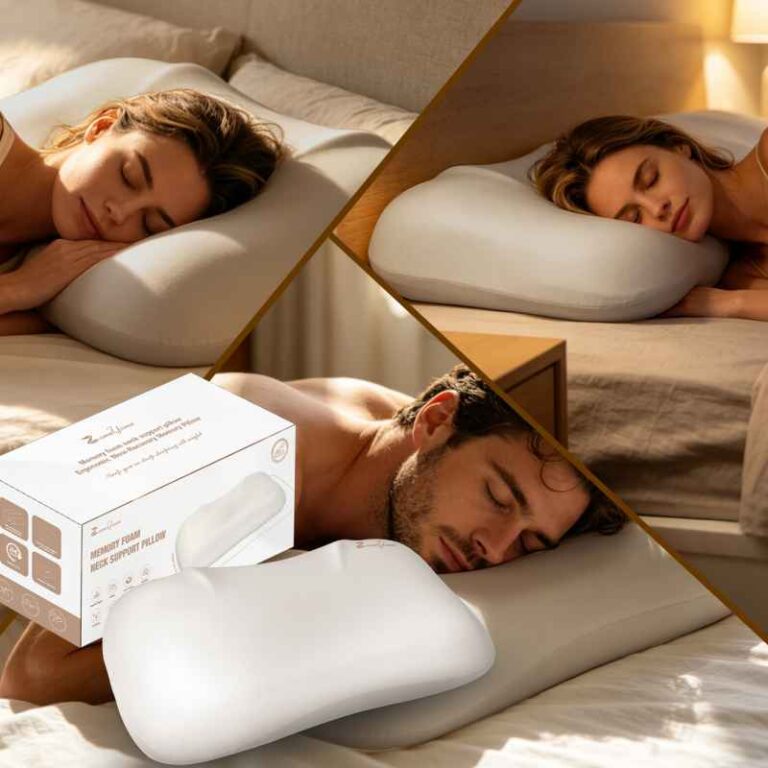
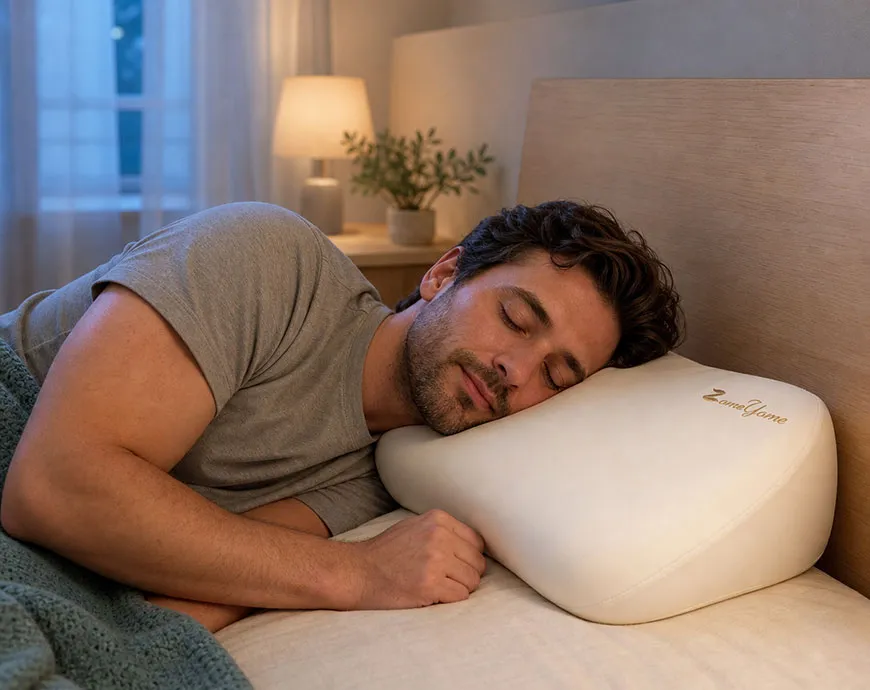
Side sleepers need higher support (4–5 inches) to fill the gap between your head and shoulder. The ZomeYome butterfly design is particularly suited for side sleepers because the extended wing edges cradle your shoulder and upper arm, preventing the arm numbness that occurs when circulation is restricted.
Stomach sleepers should use minimal-height contour pillows (2–3 inches) or avoid contour designs altogether, since this position inherently rotates your neck and spine. If you primarily sleep on your stomach, consider transitioning to back or side sleeping for better long-term spinal health.
Body type also matters. Heavier individuals may compress memory foam more quickly, requiring a firmer or denser foam to maintain consistent support. Lighter individuals benefit from softer foam that conforms readily without excessive resistance.
Best practice: Before purchasing, measure the distance from your shoulder to your ear while lying on your side—this approximates the ideal pillow height for your frame.
Memory Foam Materials and Cooling Technology
The material composition of your contour pillow directly affects durability, temperature regulation, and support quality.
The ZomeYome contour pillow uses premium BASF slow-rebound memory foam with professional 3–5 second rebound technology. This means the foam gradually adapts to your head and neck shape, distributing pressure evenly rather than creating sudden pressure zones. The slow rebound also prevents the pillow from feeling too firm or too soft—it provides balanced support that adjusts to your body’s needs.
BASF foam is certified to be low-odor and non-toxic, free of harmful volatile organic compounds (VOCs). This certification is important if you have chemical sensitivities or prefer to avoid off-gassing, which can cause headaches and respiratory irritation during the first few weeks of ownership.
Breathability depends on foam cell structure and cover material. Open-cell memory foam allows better airflow than traditional closed-cell foam, and a breathable pillowcase—like the cooling fabric included with ZomeYome pillows—helps regulate temperature throughout the night. Hot sleepers should prioritize covers with moisture-wicking properties and foam that doesn’t trap body heat.
Gel-infused foam, mentioned in some premium contour options, adds cooling agents to the foam matrix, but these supplements require proper material composition to be effective. Standard memory foam naturally tends to sleep warm, so covering material and room temperature often matter more than foam additives alone.
Best practice: If you sleep hot, test your pillow for the first few nights with your air conditioning set 2–3 degrees cooler than usual to allow your body to adapt to the material’s thermal properties.
Contour Pillow vs. Standard Pillow: Feature Comparison
Understanding the practical differences between contour and standard pillows helps you decide whether the investment is worthwhile for your situation.
| Feature | Contour Pillow | Standard Pillow |
|---|---|---|
| Head & Neck Support | Targeted, multi-zone alignment | Even weight distribution |
| Spinal Alignment | Maintains neutral cervical curve | Variable, depends on fill and body position |
| Pressure Point Relief | High—foam conforms to contours | Moderate—depends on fill density |
| Typical Lifespan | 3–5 years (memory foam) | 1–2 years (polyester), 2–3 years (down) |
| Sleep Position Versatility | Optimized for back/side sleeping | Works for all positions equally |
| Maintenance | Spot-clean cover; do not machine wash foam | Often machine-washable |
| Adjustment Period | 1–2 weeks to adapt | Immediate comfort |
| Price Range | $35–$215 | $15–$60 |
Contour pillows cost more upfront but deliver measurable benefits for people with existing neck issues, specific sleeping positions, or chronic pain. Standard pillows remain a good choice for budget-conscious buyers, stomach sleepers, or those who switch positions frequently during the night.
Best practice: Calculate cost-per-use over a 4-year period. A $40 contour pillow used every night breaks down to approximately $0.03 per night—often lower than the cost of pain management or chiropractic visits.
Common Sleep Problems Contour Pillows Address
Contour pillows are designed to solve specific sleep-related issues. Understanding which problems align with contour pillow benefits helps set realistic expectations.
Neck stiffness and morning pain: Contour pillows excel here by maintaining cervical alignment throughout the night. Muscles relax when your spine is neutral, so you wake without the tension that accumulates when your neck works to compensate for poor pillow support.
Shoulder soreness: Side sleepers often experience shoulder pain when their pillow is too low, forcing them to shift their weight. The ZomeYome butterfly wing design lifts your shoulder slightly, reducing pressure and preventing the aching that wakes you at night.
Snoring and sleep apnea: Some snoring stems from airway obstruction caused by neck position during sleep. A contour pillow that slightly elevates your head and keeps your airway open may reduce snoring intensity. However, sleep apnea requires medical evaluation—a pillow alone is not a treatment.
Arm numbness in side sleepers: Numbness occurs when the pillow’s edge cuts off circulation to your arm. The extended wing design of ZomeYome pillows provides an arm rest, maintaining circulation and preventing “dead arm” sensations during the night.
Migraines triggered by poor sleep posture: Tension headaches and migraines can originate from cervical muscle tension. Better alignment during sleep reduces this trigger, though other migraine causes (stress, diet, environment) may persist.
Conditions contour pillows do not reliably address: Insomnia, sleep apnea, PTSD-related sleep disturbances, and severe arthritis require medical intervention beyond pillow support. A contour pillow is a complementary tool, not a standalone treatment for these conditions.
Best practice: If you have an existing medical condition affecting sleep, consult your physician or sleep specialist before investing in a contour pillow to ensure it complements your treatment plan.
Selecting the Right Contour Pillow Height and Firmness
Choosing the correct pillow for your body requires understanding both height and firmness independently—they are not the same factor.
Height selection: Measure from your shoulder to your ear while lying on your side. Most contour pillows come in standard sizes (Small: 2.5–3.5 inches, Medium: 3.5–4.5 inches, Large: 4.5–5.5 inches). If you’re between sizes, consider your primary sleeping position. Back sleepers typically prefer the lower end of their range, while side sleepers prefer the higher end.
Firmness consideration: Firmness refers to how much the foam resists your head’s weight. Firmer foam (less compression) suits heavier individuals and those who prefer strong support. Softer foam adapts quickly and suits lighter individuals or those sensitive to pressure. The ZomeYome slow-rebound foam offers balanced support across weight ranges because its 3–5 second rebound rate prevents both excessive sinkage and uncomfortable firmness.
Trial periods: Many manufacturers offer 30-night trial periods or return windows. Use this to test the pillow’s height and firmness in your own sleep environment. Your bedroom temperature, mattress firmness, and sleep habits affect how a pillow performs—laboratory testing cannot replicate your personal situation.
Best practice: If your first pillow isn’t perfect, don’t immediately return it. Spend at least 10 nights allowing your neck muscles to adjust to the new support level. True incompatibility typically becomes clear by night 7; adjustment soreness usually resolves by night 14.
Durability, Maintenance, and Long-Term Value
A quality contour pillow should maintain its support and shape for 3–5 years with proper care. Memory foam durability depends on material density, foam grade, and how consistently the pillow is used.
The BASF premium slow-rebound foam in the ZomeYome contour pillow resists permanent deformation because the molecular structure recovers fully after each night’s compression. Unlike cheaper polyfoam, which can flatten or develop body impressions, high-grade BASF foam returns to its original shape repeatedly without losing support capacity.
Maintenance guidelines: Machine washing memory foam damages its cellular structure and voids most warranties. Instead, spot-clean the foam cover with mild soap and water, air-dry completely, and wash the included breathing pillowcase regularly. Store the pillow in a dry location away from direct sunlight, which can degrade foam over time.
Expected lifespan markers: After 2–3 years, you may notice the foam responding more slowly to pressure (longer rebound time). By year 3–4, if you sleep on the same side of the pillow consistently, a subtle body impression may appear. These changes indicate normal material fatigue, not manufacturing defect. Most users report good support through year 4, with diminishing returns by year 5.
Best practice: Rotate your pillow quarterly (flip and reverse) to distribute wear evenly across the foam surface. This simple step can extend lifespan by 6–12 months.
Adjustment Period and Realistic Expectations
New contour pillow users often expect immediate relief from neck pain. In reality, your neck muscles must adjust to proper alignment over 1–2 weeks.
If you’ve spent months or years sleeping with poor cervical support, your neck muscles have adapted to working overtime. When you suddenly switch to a pillow that maintains neutral alignment, these muscles experience a mild adjustment soreness—similar to beginning a new exercise routine. This is not pain; it’s the sensation of muscles relaxing into their proper function.
True pain (sharp, shooting, or severe) indicates the pillow height is wrong or you have an underlying condition. Stop using it and consult a healthcare provider.
Most users report noticeable improvement by week 2, with continued refinement through week 4. By month 2, people often report waking without stiffness, improved daytime alertness, and reduced tension headaches. These improvements accumulate gradually, not overnight.
Best practice: Log your sleep quality for the first 14 nights (scale 1–10) to track improvement objectively. Subjective memory of “how I used to feel” is unreliable; written records show trends clearly.
Making the Right Choice for Your Sleep
A contour pillow is a practical investment for people with specific sleep challenges—neck pain, shoulder soreness, side-sleeping discomfort, or poor cervical alignment. It is not a cure-all for insomnia or serious sleep disorders, and it requires an adjustment period before delivering benefits.
The ZomeYome contour pillow’s bionic butterfly design and BASF memory foam address the most common contour pillow benefits: targeted cervical support, pressure relief, extended shoulder accommodation for side sleepers, and durable performance over years of use. Paired with the included breathable pillowcase and a trial period, it’s a low-risk way to test whether contour design improves your sleep quality.
Consider your primary sleeping position, body frame, specific sleep complaints, and budget. If you spend most nights as a back or side sleeper with neck or shoulder discomfort, a contour pillow is likely to help. If you switch positions every hour or have no specific complaints, stick with a traditional pillow or hybrid design.
Use the trial period to test in your own bedroom with your existing mattress and room environment. Your personal sleep context matters more than anyone’s recommendation. If the pillow addresses your specific issue after a 14-night adjustment period, it’s the right choice. If not, the return policy ensures minimal financial risk.
Next step: Take the sleep position compatibility quiz on our website to identify your ideal pillow height, then explore our ergonomic contour pillow buying guide for detailed material comparisons and feature breakdowns. For specific cervical pain concerns, our cervical neck pillow USA buying guide provides condition-specific recommendations.
Authoritative reference: Neck support pillows: a comparative study – PubMed.
FAQ
Can I use a contour pillow if I switch sleeping positions during the night?
Contour pillows work best for consistent sleepers—those who spend 70% or more of the night in one or two positions. If you change positions every 1–2 hours, a contour pillow may feel uncomfortable during transitions because the curves are designed for one orientation. Consider a traditional pillow or hybrid design that supports multiple positions. The ZomeYome contour pillow’s extended wing design offers some versatility, so test it before committing to the return window.
How long does it take to adjust to a contour pillow?
Most users adjust within 7–14 nights. The first 3 nights often feel uncomfortable because your neck expects the old pillow’s support level. By night 7, your body recognizes the benefit; by night 14, adjustment soreness typically resolves. If discomfort persists beyond 14 nights, the pillow height or firmness is likely mismatched to your body.
Are contour pillows suitable for hot sleepers?
Memory foam naturally retains body heat more than traditional pillows. However, breathable covers, adequate room ventilation, and gel-infused or open-cell foam options can mitigate this. The ZomeYome contour pillow includes a cooling breathable pillowcase designed to wick moisture and dissipate heat. If you sleep extremely hot (night sweats), pair the pillow with a moisture-wicking mattress protector and keep your bedroom temperature below 68°F.
What is the difference between gel-infused and standard memory foam contour pillows?
Gel-infused foam contains cooling compounds suspended in the foam matrix. In theory, this draws heat away from your skin. In practice, gel additives only provide modest cooling benefits—effective cooling relies more on cover material and room temperature than foam type. Standard memory foam with a breathable cover often performs similarly to gel-infused foam at lower cost. Test both if available before deciding.
Can contour pillows help with snoring?
Positional snoring (caused by your head tilting back and restricting your airway) may decrease with a contour pillow that elevates your head slightly and keeps your chin neutral. However, snoring from sleep apnea, anatomical obstructions, or allergies requires medical evaluation. A pillow is a supporting tool, not a treatment. If snoring persists or you experience breathing pauses during sleep, consult a sleep specialist.
How do I clean and maintain a contour pillow?
Never machine wash memory foam—water can damage the cellular structure and void warranties. Spot-clean the foam cover with mild soap and cool water; air-dry completely before returning the pillow to use. Machine wash the included pillowcase every 1–2 weeks. Every 3 months, rotate the pillow (flip and reverse) to distribute wear evenly and extend lifespan.
How long does a contour pillow last?
Quality memory foam contour pillows typically maintain good support for 3–5 years with regular use. The ZomeYome pillow uses BASF premium foam designed for durability and slow rebound recovery. Lifespan depends on body weight, consistent pressure distribution, and maintenance. Lighter individuals may see longer lifespan; heavier individuals may experience faster compression. By year 5, most users notice reduced support, signaling replacement is due.
Are contour pillows suitable for all body sizes?
Contour pillows come in standard sizes (Small, Medium, Large) designed for typical adult frames. Very large individuals or those with atypical shoulder widths may find standard sizes less effective. Conversely, petite individuals may find even Small sizes slightly too high. Consult the manufacturer’s size guide based on height and shoulder width before purchasing. Many brands offer trial periods precisely because body uniqueness matters.
What is the science behind cervical spine alignment in sleep?
Your cervical spine (neck) naturally curves slightly forward in an S-shape. During sleep, proper pillow support maintains this neutral curve rather than forcing your head to flex forward (chin toward chest) or extend backward (looking upward). Neutral alignment reduces muscle activation because ligaments and joints support your head’s weight rather than muscles working overtime. Reduced muscle effort means faster muscle relaxation and better sleep quality. Research indicates that optimal pillow height correlates directly with morning stiffness reduction and overall sleep satisfaction.
Discuss Your Zomeyome Contour Pillow Requirements
Need help selecting the right zomeyome contour pillow solution for your project?