
Table of Contents
breathable pillowcase bed pillow: Key Buying Factors
A breathable pillowcase bed pillow combination should allow heat and moisture to move away from the sleeping surface without sacrificing fit, softness, or easy care. The right choice depends on more than a fabric label. Fiber type, weave, thickness, finishes, pillow shape, room humidity, and any underlying protector can all change how the surface feels during the night.
For hot sleepers, the best purchase is usually the pillowcase that matches the actual bedroom environment. A crisp cotton percale case may suit a warm, dry room, while a lyocell-based fabric may be more useful where sweat and humidity are persistent concerns. Before buying, decide whether you need maximum airflow, stronger moisture management, or a practical balance of both.
What Breathable Really Means for a Pillowcase
Breathability is often used as a general comfort claim, but it includes several different textile properties. The first is air permeability, which describes how readily air passes through a fabric. Open structures, thinner materials, and less restrictive finishes tend to support greater airflow.
Air permeability can be evaluated with recognized methods such as ASTM D737. A test result can help buyers compare similar fabrics, although it should not be treated as a complete measure of cooling comfort. Laboratory airflow does not account for every variable found in a bedroom, including humidity, body heat, pillow fill, or a waterproof layer beneath the case.
The second property is moisture-vapor transfer. This concerns how effectively water vapor moves through the textile before it becomes liquid sweat. A third factor is moisture absorption or wicking, which affects how the material handles perspiration after it reaches the fabric.
Cool-to-the-touch sensation is different again. Some textiles feel cool during initial contact because they draw heat from the skin quickly. That sensation may fade as the material reaches body temperature. It should not be confused with continuous airflow or sustained moisture control.
Best practice: Ask sellers to define “breathable” and confirm whether the claim refers to airflow, moisture transfer, wicking, or an initial cool-touch effect.
Airflow Versus Moisture and Sweat Management
A pillowcase with strong airflow is useful when the room is warm but relatively dry. Air can circulate through the textile, reducing the closed, stuffy sensation associated with dense bedding. However, high airflow alone may not keep the surface comfortable when humidity is elevated or the sleeper perspires heavily.
Moisture management becomes more important in hot and humid conditions. A moisture-wicking pillowcase moves liquid away from direct skin contact and distributes it across a larger area. Moisture-vapor transmission helps humidity pass through the fabric before it condenses. Absorbent fibers can also buffer moisture temporarily, but they need suitable drying conditions to release it.
The bed pillow itself matters. Dense memory foam often permits less internal air movement than shredded foam, fiberfill, or ventilated pillow constructions. A highly breathable outer case cannot fully compensate for a heat-retaining pillow core. Likewise, stacking multiple covers can restrict the airflow available at the surface.
- Warm, dry room: Prioritize air permeability and an open, lightweight weave.
- Hot, humid room: Look for moisture-vapor transfer, wicking, and quick drying.
- Frequent night sweating: Favor washable materials and avoid heavy coatings.
- Heat-retaining foam pillow: Consider a ventilated, removable cover before adding extra layers.
Best practice: Evaluate the complete sleep system rather than judging the pillowcase in isolation.
Best Pillowcase Materials for Hot Sleepers
No single fiber is universally the most breathable. Material construction can outweigh the name printed on the package. Still, comparing common fabrics provides a useful starting point for choosing a cooling pillowcase or breathable bed pillow cover.
| Material | Typical Strength | Possible Limitation | Suitable Use |
|---|---|---|---|
| Cotton percale | Crisp hand feel and good airflow from its plain weave | May wrinkle and can retain moisture until dry | Warm, relatively dry bedrooms |
| Lyocell-derived fabric | Smooth feel and effective moisture management | Performance varies by weave, blend, and finish | Humid rooms and sleepers concerned about perspiration |
| Bamboo viscose | Soft drape with moisture-handling potential | The bamboo label alone does not prove cooling performance | Buyers who prefer a soft, fluid surface |
| Polyester microfiber | Durable, easy-care, and often budget-friendly | Standard dense microfiber may provide limited airflow | Low-maintenance bedding and cooler rooms |
| Engineered polyester | Can be designed for wicking or faster drying | Results depend on yarn design and textile construction | Performance bedding when claims are clearly explained |
Cotton Percale
Cotton percale uses a simple over-under weave that often creates a crisp, matte surface. Its structure can allow more air movement than dense sateen. Cotton also absorbs moisture, but an absorbent pillowcase may feel damp if the room does not support quick evaporation.
Lyocell and Bamboo-Derived Fabrics
Lyocell-derived fabrics are often selected for smoothness and moisture management. Bamboo viscose can offer a similarly soft hand, but “bamboo” is not a standardized guarantee of breathability. Yarn size, weave density, thickness, and finishing remain important. Buyers should compare construction details instead of assuming the fiber name determines performance.
Polyester Microfiber and Performance Knits
Standard microfiber is usually made from fine synthetic fibers packed into a smooth, tight structure. It can be durable and easy to wash, but dense versions may hold warmth. Engineered polyester is a broader category and may use specialized yarns, mesh zones, or knit structures to improve moisture transport and drying.
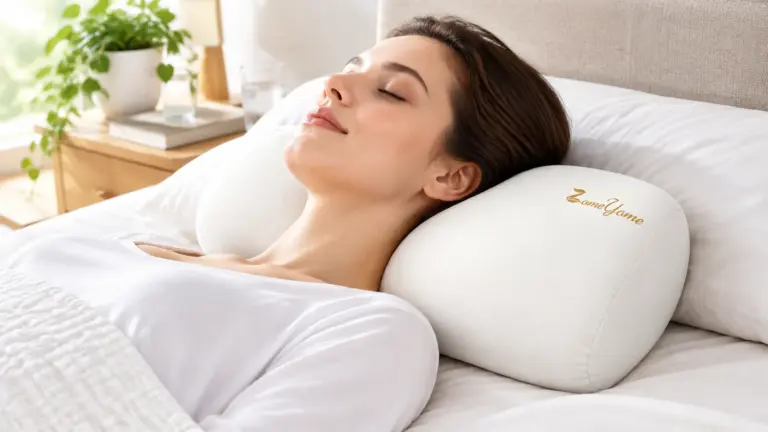
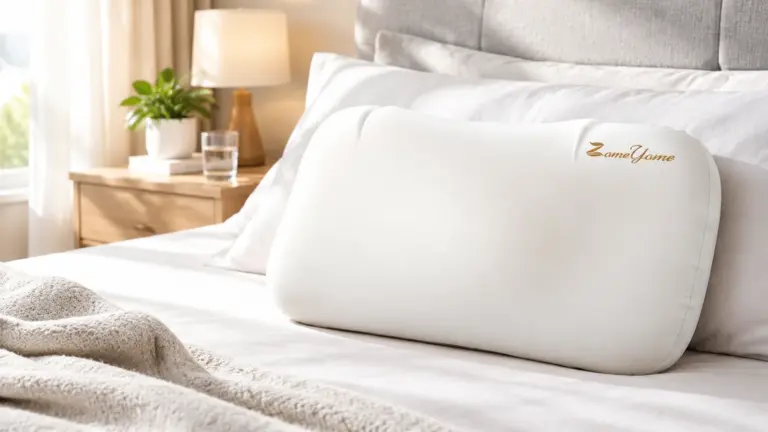
ZomeYome pillow information describes a removable, high-elastic knitted cover with a breathable mesh structure and moisture-handling characteristics. This type of integrated cover shows why buyers should examine fabric structure alongside the pillow core, particularly when considering a contoured memory foam pillow.
Best practice: Compare the fiber, weave or knit, fabric weight, finish, and care instructions before choosing a pillowcase for hot sleepers.
Why Weave, Thickness, and Finishes Matter
Two pillowcases made from the same fiber can perform very differently. A lightweight cotton percale and a dense cotton sateen do not provide the same airflow. In the same way, an open polyester knit may feel less stuffy than tightly woven microfiber, even though both products use polyester.
Thread count can offer limited information about density, but it is not a universal quality score. A very high count may create a tighter surface that reduces airflow. Yarn thickness, multi-ply construction, and counting methods also affect the published number. Buyers should avoid selecting a cooling pillowcase by thread count alone.
Coatings and finishing treatments can change the fabric further. Brushing may create a softer surface but add warmth. Waterproof membranes block liquid penetration, yet even products described as breathable may pass less air than an uncoated case. Heavy softeners and residue from laundry products can also influence absorbency or wicking over time.
- Check whether the fabric is woven or knitted.
- Look for information about weight, density, or mesh construction.
- Ask whether a coating, laminate, or topical finish is present.
- Confirm whether cooling claims describe initial touch or ongoing moisture control.
- Review washing directions before relying on a performance finish.
Best practice: Choose the lightest practical construction that still meets your durability, privacy, and protection requirements.
Pillowcase, Removable Cover, or Waterproof Protector?
A pillowcase is the outer decorative and washable layer that touches the face. A removable pillow cover is often supplied with the pillow and may be shaped to follow its contours. A pillow protector sits between the pillow and pillowcase, creating an additional barrier against moisture, dust, or stains. These products serve different purposes and should not be evaluated as interchangeable layers.
A standard pillowcase can provide the greatest style flexibility. It is easy to coordinate with sheets and replace during routine laundry. However, rectangular cases may fit poorly on cervical or butterfly-shaped pillows. Excess fabric can gather near the neck, while an undersized case can compress the foam and alter the pillow’s intended loft.
A fitted removable cover follows the pillow more closely. It can preserve contours and reduce loose fabric. ZomeYome’s available pillow information includes a removable and machine-washable knitted cover, an approach that may simplify care for a contoured pillow. Buyers considering ergonomic shapes can also review this cervical neck pillow buyer’s guide before selecting a cover.
A waterproof protector offers more complete liquid resistance, but the barrier may reduce airflow. A breathable membrane can allow some vapor transmission while resisting liquid water, yet it will rarely behave exactly like an uncoated textile. People who need spill protection may accept that tradeoff, while hot sleepers without that need may prefer fewer layers.
Best practice: Use a protector only when its protective function justifies the possible reduction in airflow and moisture release.
Fit, Closure, Care, and Certification Checklist
Standard, queen, and king labels are helpful starting points, but actual dimensions vary by manufacturer. Measure the pillow from edge to edge and note its loft at the highest point. For a gusseted, contoured, or cervical support pillow, check depth and shape as well as length and width.
An envelope closure provides a clean appearance without exposed hardware. It should include enough overlap to keep the pillow inside without pulling the case tight. A zipper can create a more secure fit for travel or contoured pillows, but its position matters. Side sleepers may notice a bulky zipper placed near the face or shoulder.
Care instructions deserve the same attention as fabric composition. Frequent washing removes body oils, perspiration, skincare products, and hair products that can reduce freshness. Machine-washable cases are convenient, but high heat may shrink natural fibers, affect elastic components, or damage certain finishes. Follow the product label rather than assuming every breathable pillowcase can tolerate hot washing and drying.
- Measure the pillow’s length, width, loft, and contour.
- Allow enough room to avoid compressing the pillow fill.
- Check whether the closure sits away from pressure points.
- Confirm machine-washing and drying requirements.
- Review expected shrinkage for natural-fiber fabrics.
- Wash new bedding before use if the care label permits.
- Check whether sensitive-skin claims address dyes and finishes.
Certification should be treated as a separate criterion. For example, OEKO-TEX STANDARD 100 concerns testing textile components for specified harmful substances. It does not establish that a pillowcase is breathable, cooling, hypoallergenic, or capable of improving sleep quality. Mattress flammability standards are also not evidence of pillowcase thermal performance.
Best practice: Verify fit, care, textile safety, and cooling claims independently instead of treating one label as proof of every benefit.
How to Match a Pillowcase to Your Sleep Environment
Begin with your most persistent comfort problem. If your face and hair feel warm but remain dry, choose an open weave or breathable knit. If the pillowcase becomes damp, prioritize moisture transport and quick drying. If stains and spills are the main concern, consider a protector while accepting that airflow may decrease.
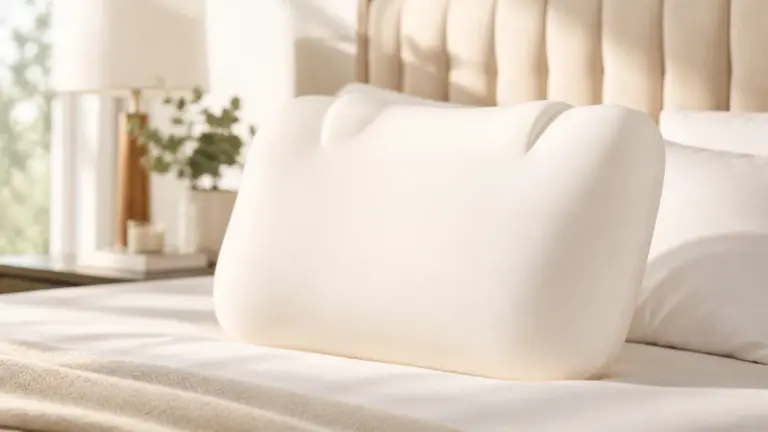
Next, inspect the pillow. A conventional rectangular pillow offers broad case compatibility. A high-loft pillow needs more internal volume, while a contour memory foam model usually works best with a fitted cover. If pillow shape and neck support are part of the purchase decision, the deep-sleep pillow guide provides additional fit considerations.
Finally, consider the household routine. Cotton percale may appeal to buyers who like crisp bedding and do not mind wrinkles. Lyocell-derived fabrics can suit sleepers who value a smooth hand and moisture control. Easy-care synthetic textiles may be practical for guest rooms, travel, office rest, or frequent laundering, provided the construction is not excessively dense.
A breathable pillowcase can improve surface comfort, but it should not be presented as a treatment for pain, allergies, insomnia, or another health condition. Local cooling effects may also change during the night. Set realistic expectations and focus on measurable construction details, suitable fit, and manageable care.
Best practice: Select the pillowcase according to room climate, perspiration level, pillow construction, protection needs, and laundry habits—in that order.
FAQ
Frequently Asked Questions
What makes a pillowcase breathable?
Air-permeable construction, moisture-vapor transfer, fabric weight, and minimal coatings all contribute. Fiber type alone does not determine breathability.
Which material is best for hot sleepers?
Cotton percale often favors airflow, while lyocell-derived fabrics may manage moisture better. The best option depends on humidity, sweating, weave, and thickness.
Can a waterproof protector be breathable?
Yes, some barriers pass water vapor, but they may still reduce airflow compared with an uncoated pillowcase.
Does high thread count reduce breathability?
It can. Dense construction may restrict airflow, although yarn size, weave, and finishing also affect performance.
Does OEKO-TEX certification mean cooling?
No. OEKO-TEX STANDARD 100 addresses tested harmful substances, not airflow, moisture transfer, or cooling performance.
Discuss Your Breathable Pillowcase Bed Pillow Requirements
Create a more comfortable sleep setup with ZomeYome. Start by reviewing our deep-sleep pillow guide and compare pillow shape, cover construction, fit, and care before making your choice.