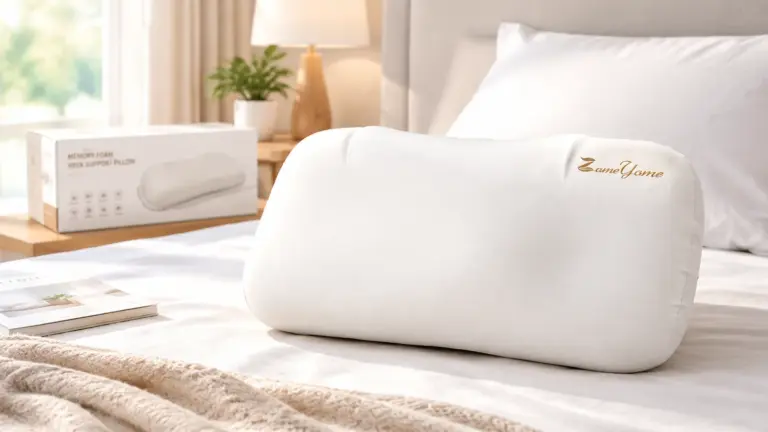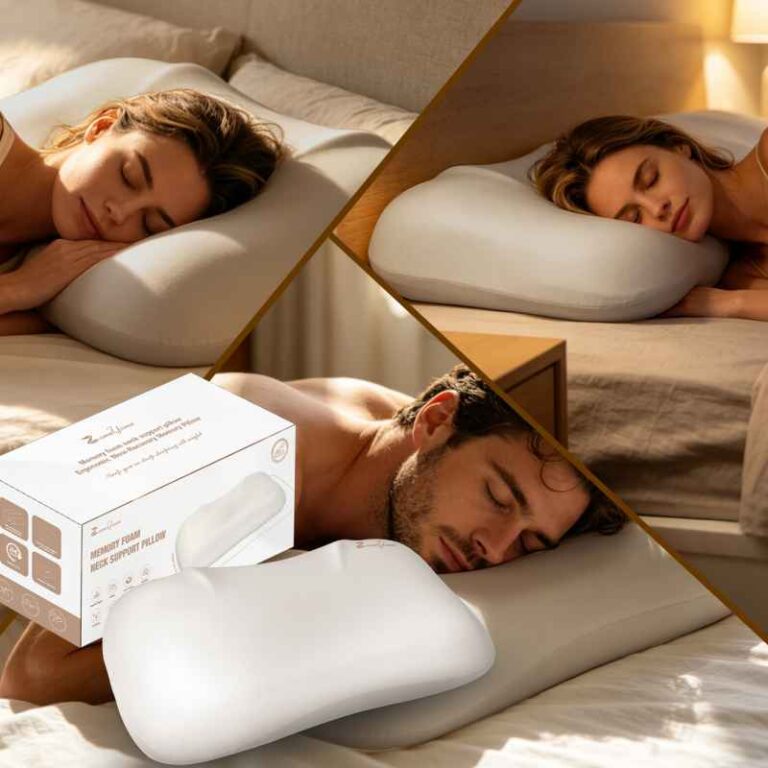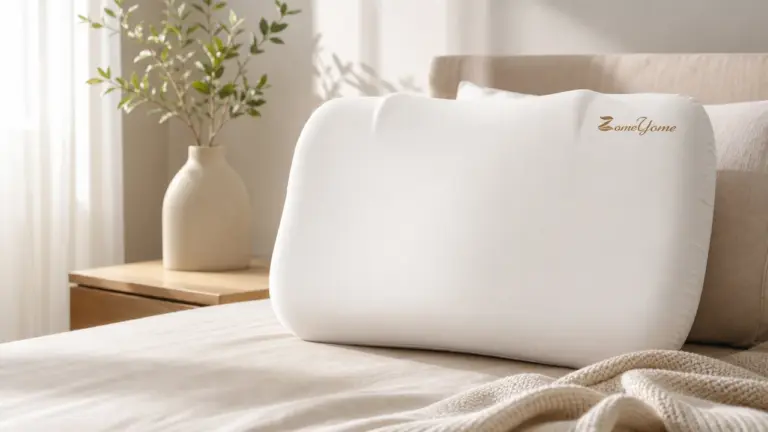

A cooling memory foam pillow can be a practical choice for sleepers who want contouring support without the closed-in feel often associated with traditional foam. The right option depends on more than a cooling label: evaluate the foam structure, cover fabric, loft, firmness, and your usual sleep position before buying.
For many U.S. shoppers, the strongest starting point is simple: choose a pillow that supports neutral head-and-neck positioning first, then compare its cooling system. A cold-feel cover may feel refreshing at bedtime, but core airflow matters more for managing warmth through the night.
Table of Contents
What Makes a Memory Foam Pillow Cooling?
Memory foam responds to body heat and pressure, allowing it to cradle the head and neck. Because conventional solid foam can hold heat, manufacturers may add materials or construction details intended to improve temperature regulation. These features work differently and should not be treated as interchangeable.
| Cooling method | How it works | Best use | Key limitation |
|---|---|---|---|
| Gel-infused foam | Gel is blended into the foam to help distribute heat. | Sleepers who prefer a familiar memory foam feel. | It may not create sustained airflow in a dense foam core. |
| Ventilated memory foam | Channels or perforations create paths for air movement. | Hot sleepers who value core breathability. | Performance also depends on the cover and pillowcase. |
| Phase change material | A surface material absorbs or releases heat within a comfort range. | People who notice heat buildup soon after lying down. | The cool-touch sensation can be most noticeable at first contact. |
| Cooling fabric cover | Moisture-managing or cool-touch textiles improve surface comfort. | Sleepers who want a cooler pillow surface. | A cover alone cannot fully offset a heat-retaining core. |
Compare the entire construction instead of relying on a proprietary cooling name. Look for clear information about the foam core, airflow design, removable cover, and care instructions.
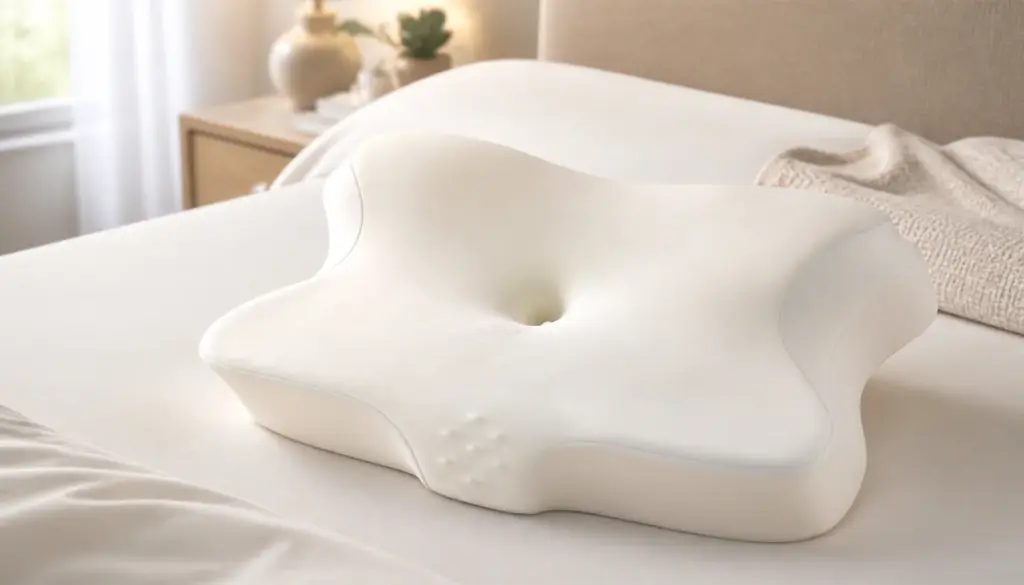
Do Cooling Memory Foam Pillows Stay Cool All Night?
Most cooling pillows do not remain cold in the way a chilled surface does. Their realistic purpose is to reduce heat buildup, improve moisture management, or make the pillow surface feel cooler when you first lie down. Results vary with room temperature, bedding, sleepwear, and the sleeper’s heat sensitivity.
A ventilated memory foam pillow can offer a more useful long-term cooling approach than a cool-touch cover alone because the design addresses airflow inside the core. However, a breathable cover and a lightweight pillowcase are still important because they sit between the pillow and the sleeper.
For a warmer bedroom, pair a temperature-regulating pillow with breathable sheets and avoid heavy synthetic pillow protectors that can restrict airflow. Treat cooling as a sleep-system decision rather than a single-product promise.
Choose Loft and Firmness by Sleep Position
Loft is the pillow’s height under the head, while firmness describes how much the fill resists compression. Both affect cervical alignment. A pillow that is too high may angle the neck upward, while a pillow that is too low may leave the neck unsupported.
| Sleep position | Typical loft direction | Typical firmness direction | What to check |
|---|---|---|---|
| Side sleeper | Medium to high | Medium-firm to firm | Fill the space between the shoulder and head without pushing the head upward. |
| Back sleeper | Low to medium | Medium | Support the natural neck curve while keeping the chin neutral. |
| Stomach sleeper | Low | Soft to medium | Minimize neck extension and avoid excessive height. |
| Combination sleeper | Medium or adjustable | Medium | Choose a profile that remains comfortable during position changes. |
Broad-shouldered side sleepers often need more effective loft than smaller-framed sleepers, but height should be judged after the foam compresses. Use your mattress firmness and shoulder width as part of the fit check.
Gel-Infused vs. Ventilated Memory Foam
Gel-infused foam
A gel memory foam pillow generally maintains the slow-response, pressure-relieving character many sleepers expect from memory foam. It can be a good match for people who want close contouring and moderate heat-management support. Check whether the product also uses airflow channels or a breathable cover.
Ventilated foam
Ventilated foam uses holes, grooves, or channels to encourage air circulation through the pillow core. This construction can be especially relevant for people who wake feeling warm around the head and neck. It may also feel less dense than a solid foam block, depending on the foam formulation.
Choose gel-infused foam when contouring feel is your priority, and favor ventilated construction when airflow is the main concern. A hybrid approach can make sense when both surface comfort and core breathability matter.
Key Buying Criteria Beyond Cooling Claims
- Foam format: Solid foam provides stable contouring, while shredded foam may allow more adjustability. Ventilated cores may better support airflow.
- Cover construction: Look for a removable, breathable pillow cover when easy care is important. Confirm the washing instructions before purchase.
- Shape: A traditional rectangle suits many sleepers, while a contoured design may provide targeted neck support.
- Odor expectations: New foam can have a temporary manufacturing smell. Airing the pillow out in a well-ventilated space can help before first use.
- Material disclosures: Review the seller’s stated foam and textile information, including any relevant certification claims, rather than assuming all foam products meet the same standards.
Research on pillow design and neck comfort suggests that support characteristics can influence sleep experience, although individual response still varies. Review this study on pillow designs and neck outcomes as background, then assess pillow height and comfort during your own trial period.
Pros and Cons of a Cooling Memory Foam Pillow
| Potential advantages | Potential tradeoffs |
|---|---|
| Contours around the head and neck for stable support. | Dense foam can still feel warm without ventilation or a breathable cover. |
| Often maintains its shape better than loose-fill pillows. | May feel heavier and less responsive than down alternative fills. |
| Cooling features can reduce surface warmth and heat buildup. | Cooling performance differs by room conditions and sleeper preference. |
| Contoured profiles can help sleepers fine-tune neck support. | Fixed-shape designs may not suit every body frame or sleep position. |
| Removable covers can simplify routine care. | The foam core is usually not machine washable. |
A cooling memory foam pillow is often a strong option for sleepers who value pressure relief and shape retention. Consider latex, down alternative, or an adjustable-fill pillow when faster response, easier washing, or a less structured feel is more important.
How to Compare Cooling Pillows Before You Buy
- Identify whether you need cooler surface feel, better airflow, or both.
- Match the pillow’s compressed loft to your primary sleep position and shoulder width.
- Review whether the cooling feature is located in the cover, foam core, or multiple layers.
- Check cover removal and washing instructions separately from foam-core care.
- Read product material disclosures and compare them across similar pillow types.
If neck positioning is part of your decision, explore this ergonomic contour pillow buying guide for a closer look at contour designs, memory foam, and latex options.
FAQ
Frequently Asked Questions
Is a cooling memory foam pillow better than regular memory foam?
It can be a better fit for hot sleepers because it may add airflow, heat distribution, or a cooler surface fabric. It is not automatically better for everyone, since loft, firmness, and neck support remain equally important.
Which is better for hot sleepers: gel-infused or ventilated foam?
Ventilated foam generally addresses airflow in the pillow core, while gel-infused foam focuses on heat distribution within the foam. For persistent overnight warmth, compare ventilation and cover breathability first.
Are cooling memory foam pillows good for side sleepers?
Yes, provided the pillow has enough effective loft and firmness to fill the shoulder-to-neck gap. Side sleepers should check the pillow after it compresses under normal use.
Can you wash a cooling memory foam pillow?
In most cases, the removable cover may be washable according to its care label, while the memory foam core should not be machine washed. Follow the product-specific instructions and air-dry the core if surface cleaning is needed.
What certifications should I look for when buying foam?
Review the product’s stated material and certification information, including any CertiPUR-US claim where applicable. Confirm the claim on the product page or packaging instead of assuming it applies to every memory foam pillow.
Discuss Your Cooling Memory Foam Pillow Requirements
Ready to compare supportive pillow designs for your sleep routine? Shop ZomeYome memory foam pillows and choose a profile that better matches your preferred sleep position.