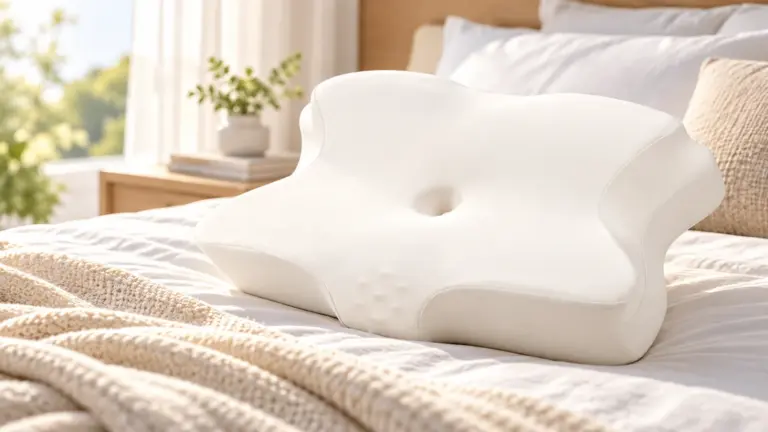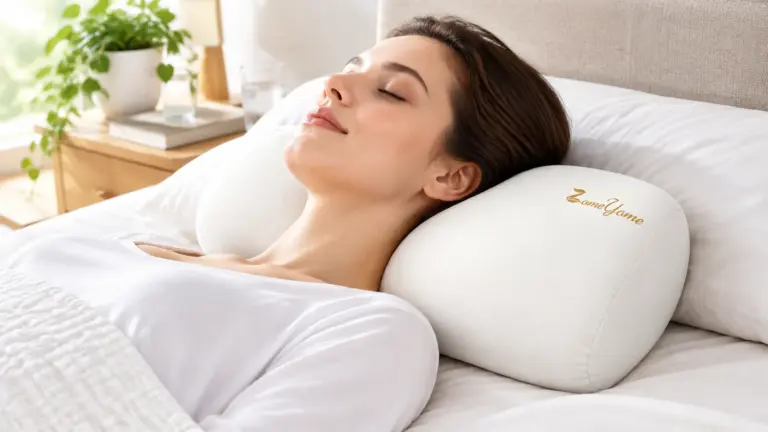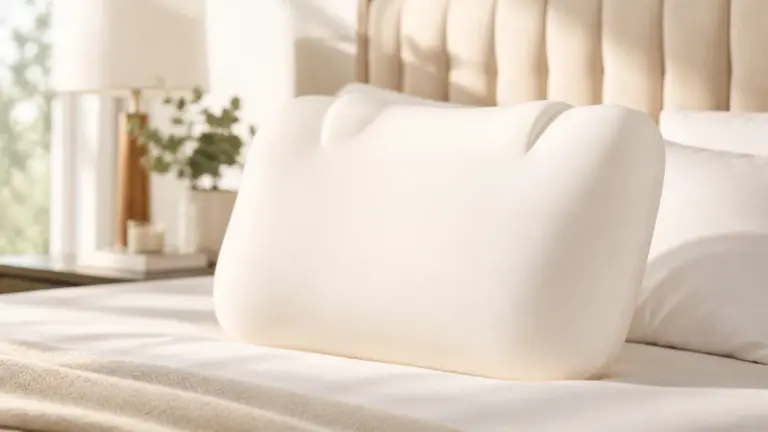

Side sleepers need a memory foam pillow for side sleepers that fills the gap between mattress and head, keeping the spine straight. The short answer: look for a high-loft, slow-rebound foam pillow with a contoured surface that cradles the neck. ZomeYome’s dual-height design pairs a taller side for side and back sleepers with a softer profile for smaller frames.
Why Side Sleepers Face a Different Pillow Problem
When you lie on your side, your shoulder acts as a wedge. A standard down pillow compresses flat, leaving your head tilted toward the mattress. That twist loads the cervical spine and triggers morning stiffness. A memory foam pillow for side sleepers should hold its shape and push back just enough to keep the ear, shoulder, and hip in a line.
Shoulder width matters more than most buyers realize. Broad-shouldered adults need roughly 4–5 inches of loft; petite sleepers may do better with 3–4 inches. This is why a single-height pillow rarely fits every body. Adjustable fill is one fix; a dual-sided foam block is another. A truck driver with wide shoulders and a petite office worker will have opposite needs, yet both identify as side sleepers.
Best practice: measure the distance from your mattress surface to the side of your head while lying down. Use that as a loft target when browsing.
Key Selection Criteria for a Memory Foam Pillow for Side Sleepers
Not all foam is equal. Use the checklist below before clicking “add to cart.” Each point ties to a real comfort outcome, not a marketing label.
Loft and Dual Height
Loft is the pillow’s thickness at the sleep surface. For side sleepers, a higher loft prevents neck drop. Some brands, including ZomeYome, shape the foam with two distinct heights on opposite edges. You flip the pillow to match your shoulder span or sleep position. This avoids buying separate pillows for side and back sleeping, which saves closet space and money.
Foam Density and Slow Rebound
Traditional memory foam springs back in seconds. Premium grades, like the BASF slow rebound foam used in ZomeYome’s sleeping pillow, take 3–5 seconds to recover. That slower response distributes pressure gradually, so the ear and cheek don’t get hot spots. A Wirecutter test of memory foam pillows notes that rebound speed changes the “sinking” feel but doesn’t alone predict support. Density also affects durability; a low-density block may soften too fast.
Contour and Zero Pressure Design
An ergonomic zero-pressure shape curves under the neck and dips at the head. This maintains cervical alignment and reduces tossing. ZomeYome describes its pillow as built with a zero-pressure design that disperses head, neck, and shoulder pressure evenly. The claim is plausible for contoured foam, though individual comfort varies based on mattress firmness and body weight.